Onboarding for vendors and suppliers

Bring new suppliers into your procurement process with checklists for contract signing, compliance requirements, system access, and point-of-contact alignment.


What types of onboarding checklist are used to onboard new suppliers/vendors?

Supplier onboarding typically involves several overlapping checklists that together ensure a new vendor is legally, financially, and operationally ready to work with your business.

The most common types include:

Due diligence and vetting

Verifying the supplier's business credentials, financial stability, insurance certificates, and any industry certifications before a relationship is formalized.

Legal and contractual

Covering the execution of master service agreements, NDAs, terms and conditions, liability clauses, and any regulatory or export compliance documentation.

Financial and payment setup

Collecting banking details, tax forms (such as W-9s for US vendors), payment terms agreement, and purchase order process alignment.

Compliance and risk

Ensuring the supplier meets your internal standards for data security, environmental policy, ethical sourcing, anti-bribery, and any industry-specific regulations.

Operational integration

Setting up the supplier in your procurement or ERP system, assigning account contacts, establishing ordering and invoicing workflows, and agreeing on delivery and communication expectations.

Performance and SLA alignment

Documenting agreed service levels, quality standards, key performance indicators, and the process for resolving disputes or performance issues.

Common supplier onboarding mistakes/pitfalls

One of the most common mistakes businesses make is underestimating how long compliance checks and due diligence take.

Starting these early, before a procurement deadline looms, is essential to avoiding the kind of rushed vetting that creates supplier risk down the line.

Equally important is standardizing your process so that every supplier, regardless of size or spend level, goes through the same checklist. Consistency not only reduces the chance of something being missed, it also makes audits significantly easier to manage.

Supplier onboarding touches multiple departments (legal, finance, procurement, IT, and sometimes operations), so clarifying ownership of each step upfront is critical.

Without clear accountability, tasks stall and timelines slip. Every signed agreement, completed form, and approval should be stored centrally and tied to the supplier record, creating a paper trail that protects the business if a dispute or audit arises later.

Can every business benefit from better vendor onboarding processes?

The short answer is yes. That said, the impact of getting it right (or wrong!) is felt most acutely in certain sectors.

Retailers and e-commerce companies are particularly exposed, since product quality, delivery timelines, and supplier reliability flow directly through to customer satisfaction and inventory performance.

Manufacturers face similar pressures, depending on a consistent supply of raw materials and components where disruption or quality failures can halt production entirely.

In healthcare and life sciences, the stakes are even higher. Suppliers of equipment, pharmaceuticals, or clinical services must meet strict regulatory requirements, and onboarding errors carry legal and patient safety consequences that other industries simply don't face.

Financial services firms are in a comparable position, subject to intense regulatory scrutiny over their third-party relationships and required to demonstrate robust vendor due diligence to regulators.

Government and public sector bodies face their own version of this, bound by procurement regulations that demand transparency and fairness in how suppliers are selected and brought on board.

Beyond regulated industries, fast-growing startups and scale-ups have a lot to gain from disciplined supplier onboarding.

When a business is expanding quickly, bringing on new suppliers correctly, rather than just quickly, prevents the kind of compliance and operational debt that becomes very expensive to untangle later. And for large enterprises managing complex, high-volume supply chains, a standardized and scalable onboarding process is simply the only practical way to maintain oversight and control across hundreds or thousands of vendor relationships.


What task actions are used in vendors and suppliers?

For onboarding checklists in the vendors and suppliers category, there are some task actions that are often found in the onboarding templates we offer.

Create your own vendors and suppliers checklist

We'll do the hard work for you Takes less than a minute


Vendors and Suppliers onboarding that works

Drive actions for vendors and suppliers

Move from to-do to done by linking our onboarding checklists to smart actions in other vendors and suppliers apps.

Your branding

Simply upload a logo and choose a primary color, and we'll do the rest. Even the emails we send for you are branded.

Make your vendors and suppliers onboarding seamless with the rest of your brand.

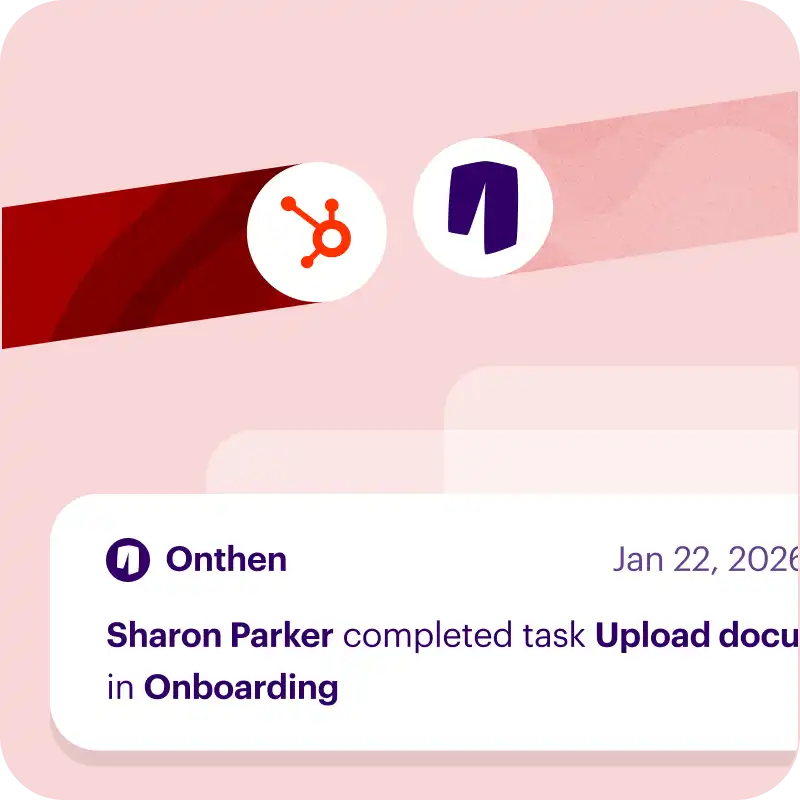
Syncs with HubSpot

We bridge the gap by syncing every vendors and suppliers onboarding action back to your CRM timeline and custom fields. Works with contacts, deals, and tickets.

  • Manage checklists with the App Card
  • Adds events to your timeline
  • Syncs uploaded files and photos

Chases up for you

We'll send automatic nudges for overdue tasks and a helpful weekly summary to keep everyone focused on what's left to do.

Create your own vendors and suppliers checklist

We'll do the hard work for you Takes less than a minute